
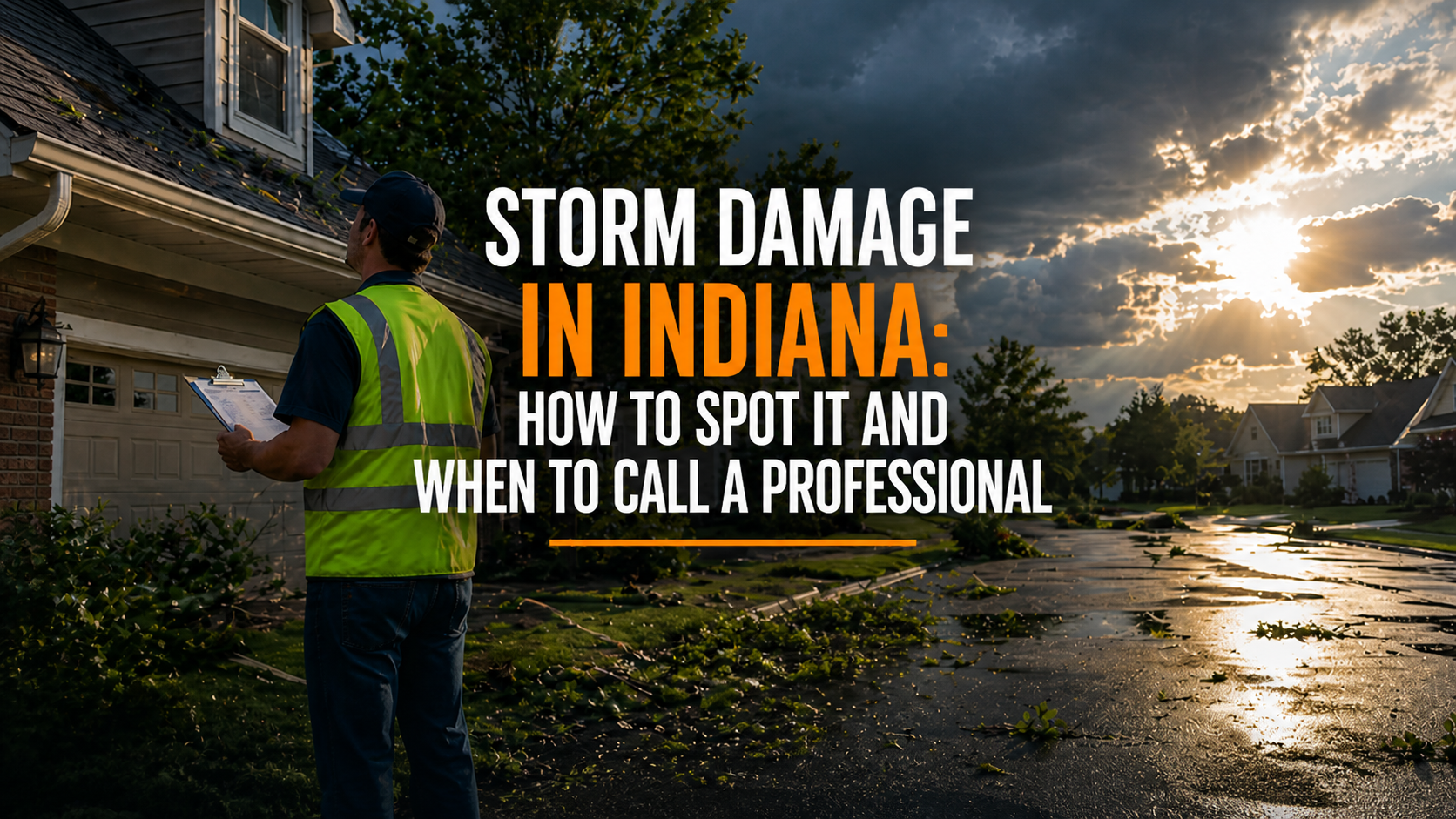
Indiana homeowners know the weather here doesn’t hold back. From late-spring hailstorms rolling through Terre Haute to straight-line winds tearing across Hendricks County, severe weather is a fact of life in the Wabash Valley and central Indiana. The damage these storms leave behind isn’t always obvious—but ignoring it can turn a minor repair into a major headache.
Whether you’re in Avon, Plainfield, Brownsburg, Danville, or anywhere in between, understanding what storm damage looks like—and when it’s time to bring in a professional—can save you thousands of dollars and protect the value of your home.
What Types of Storms Cause the Most Damage in Indiana?
Indiana sits right in a corridor where warm Gulf air collides with cold northern fronts, making our region especially prone to severe weather from March through September. The most common culprits behind property damage include:
Hailstorms
Hail is one of the leading causes of roofing damage in central Indiana and the Wabash Valley. Even marble-sized hail can crack shingles, dent metal flashing, and damage gutters. Golf-ball-sized hail—which hits areas like Terre Haute, Plainfield, and Mooresville more often than most homeowners realize—can compromise your roof’s integrity in a single storm.
Straight-Line Winds and Thunderstorms
Indiana thunderstorms regularly produce winds of 60 mph or more. These gusts can tear shingles off a roof, blow down fence sections, dislodge gutters, and send debris into siding. Brownsburg, Danville, and Avon have all seen significant wind events in recent storm seasons. Unlike tornadoes, straight-line wind damage can cover a wide area, meaning entire neighborhoods can be affected at once.
Tornadoes
Indiana ranks among the top ten states for tornado activity. While full-force tornadoes obviously cause catastrophic damage, even an EF-0 or EF-1 tornado can rip shingles, collapse fencing, and damage solar panel mounts. If a tornado touches down anywhere near your property—even if you think your home was spared—a professional inspection is worth the peace of mind.
Heavy Rain and Ice Storms
Prolonged downpours can overwhelm gutters and downspouts, causing water to back up under your roofline. In winter, ice dams form when melting snow refreezes at the roof’s edge, forcing water underneath shingles. Both scenarios can lead to interior water damage, mold growth, and structural issues that aren’t visible from the ground.
Signs of Storm Damage Every Homeowner Should Know
On Your Roof
After a storm, look for missing, cracked, or curling shingles—even a few missing pieces can let water infiltrate the underlayment. Check for granule loss by looking in your gutters and at the base of your downspouts; if you see gritty, sand-like buildup, your shingles are deteriorating. Dented or cracked ridge caps, damaged flashing around vents and chimneys, and any visible sagging in the roofline are all signs you need a roofing contractor to take a closer look.
On Your Gutters
Gutters are often the first casualty of a storm. Dents from hail, sections pulling away from the fascia, and seams that have split open are all common after severe weather. If your gutters are overflowing during normal rain after a storm, they may have been knocked out of alignment or clogged with debris. Damaged gutters can’t direct water away from your foundation, which leads to much bigger problems over time.
On Your Fence
Fencing takes a beating during high-wind events. Look for leaning posts, broken or detached pickets, and gates that no longer close properly. Wood fences are especially vulnerable to wind damage, while vinyl can crack in cold temperatures during winter storms. Even if a fence looks upright, check the post bases—if they’re rocking or loose in the ground, the structural integrity has been compromised.
On Your Solar Panels
If you have solar panels, inspect them for cracks, chips, or panels that have shifted out of alignment after a storm. Hail can fracture the glass surface, reducing efficiency even if the panel still appears to work. Loose mounting hardware is another common issue after high winds. Because solar panels involve electrical components, never attempt to repair or inspect wiring yourself—always call a qualified professional.
Inside Your Home
Sometimes the first evidence of storm damage shows up inside. Water stains on ceilings or walls, peeling paint, a musty smell in the attic, or daylight visible through the roof decking are all indicators that a storm has breached your exterior. If you notice any of these, don’t wait—water damage compounds quickly and can lead to mold and structural rot.
When Is It Time to Call a Professional?
Not every storm requires an emergency call, but there are clear situations where waiting can cost you. As a general rule, contact a professional roofing and exterior contractor if:
A severe weather event has hit your area— Even if you don’t see obvious damage from the ground, hail and wind can cause issues that only a trained eye can spot from the roof. Many homeowners in Terre Haute, Avon, and Plainfield have been surprised by the extent of damage found during a professional post-storm inspection.
You see any visible damage— Missing shingles, bent gutters, leaning fence posts, or cracked solar panels all warrant a call. What looks minor from the ground is often worse up close.
Your neighbors are filing claims— Storm damage doesn’t skip houses. If contractors are working on roofs in your neighborhood in Brownsburg, Danville, Clermont, or Mooresville, your home was likely affected too.
You notice interior water intrusion— Ceiling stains, dripping, or moisture in the attic mean your roof has been compromised and needs immediate attention.
It’s been more than a year since your last inspection— Even without a recent storm, Indiana’s freeze-thaw cycle, humidity, and UV exposure take a toll on your roof, gutters, and fence. An annual inspection from a qualified contractor can catch small issues before they become expensive repairs.
A Note on Insurance Claims
Many Indiana homeowners don’t realize that their homeowner’s insurance policy covers storm damage to roofing, gutters, fencing, and even solar panels in most cases. However, insurance companies have deadlines for filing claims—typically one year from the date of the storm. Having a professional inspection done promptly after a weather event creates the documentation you need to support your claim. A reputable contractor will provide a detailed damage report and can work directly with your insurance adjuster to make the process as smooth as possible.
Why Guarantee Roofing & Fence?
Guarantee Roofing & Fence has been serving Indiana since 1919—over a century of protecting homes and businesses across the Wabash Valley and central Indiana. We’re not a storm-chasing outfit that shows up after a hailstorm and disappears. We live and work here, with locations in Terre Haute and Avon, and we’re committed to the communities of Plainfield, Brownsburg, Danville, Mooresville, Camby, Clermont, Clayton, and beyond.
Whether you need a post-storm roof inspection, gutter repair, fence replacement, or solar panel assessment, our team has the expertise to evaluate the damage, guide you through the insurance process, and deliver quality repairs that last.
Schedule Your Free Storm Damage Inspection
If your property has been through a recent storm—or if it’s been a while since your last inspection—don’t wait for a small problem to become a costly one. Contact Guarantee Roofing & Fence today for a free, no-obligation storm damage inspection. We proudly serve Terre Haute, Avon, Plainfield, Brownsburg, Danville, Mooresville, and all surrounding communities throughout Indiana.
Call us: (812) 232-0506
Visit us online: guaranteeroofing.com
Locations: 1221 Hulman St, Terre Haute, IN 47802 | 8447 E US Hwy 36, Avon, IN 46123